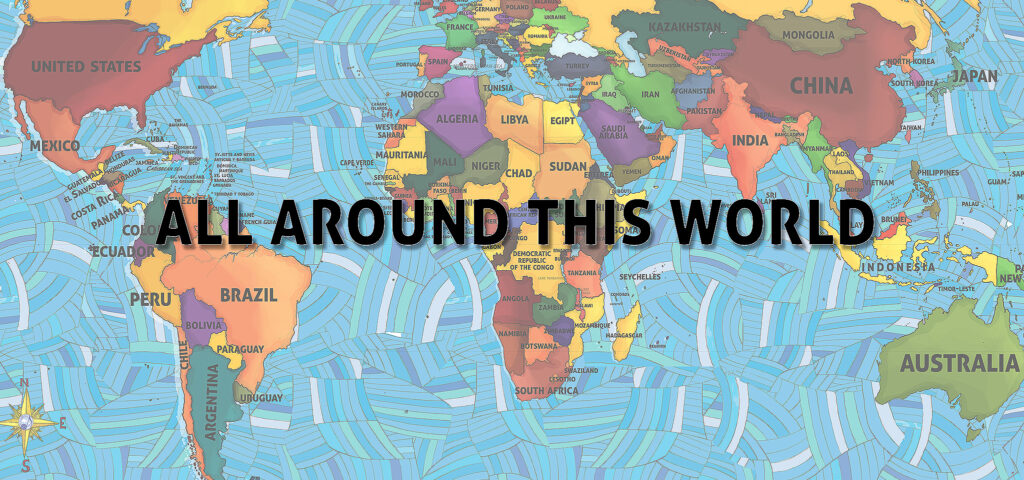
Central African music’s soul comes from its dense natural landscape and from the ancient earth-inspired rhythms of the people who live on that land. Even so, music in the region is far from insular. In fact, the most famous (and most fabulous?) music of Central Africa may be soukous. Originating mainly in the urban centers of Congo, but now present in most every small city and sleepy tribal town, soukous is infinitely danceable. (Try not to dance when you hear soukous…impossible!) Soukous emerged in the years after World War II, starting in the ’50s when big Cuban rumba orchestras became all the rage in the Congo. By the ’60’s musicians like Joseph “Grand Kalle” Kabasele readily blended Afro-Cuban rhythms with African jazz. Soukous became popular when innovators such as Sam Mangwana layered racing, jangling guitars on top of music like Kabasele’s, laying the foundation for the musical birth of Congolese artists like the long-lived Zaiko Langa Langa and its impeccably-dressed co-founder, “Pope of the Sapeurs: Society of Ambianceurs and Persons of Elegance” himself, Papa Wemba.
Why is there such a deep connection between Cuba and the Congo? During the Spanish and Portuguese colonization of the Americas most slaves came from West and Central Africa, bringing their African rhythms along in the Passage. Over the centuries Afro-Latin musicians often returned to their roots by touring in the region and by building cultural and instrumental connections with West and Central African musicians. (Putumayo’s “Congo to Cuba” explores this connection.) Perhaps in part because of this shared history, in the 1960s Latin Americas most prominent Communist revolutionaries, Fidel Castro and Che Guevara, supported Congolese anti-colonalialist struggles–Fidel by sending Cuban troops, Che by sending himself.