The quijada is a jawbone of a donkey used as a percussion instrument in Mexico and Peru. The musician holds half of the jawbone in one hand and hits the other with a stick, causing the teeth to rattle. The instrument first appeared in Peru among African slaves but became important in both African and indigenous communities. Today it’s still a staple instrument in Afro-Peruvian music, and is essential to Mexico’s son jaorhco
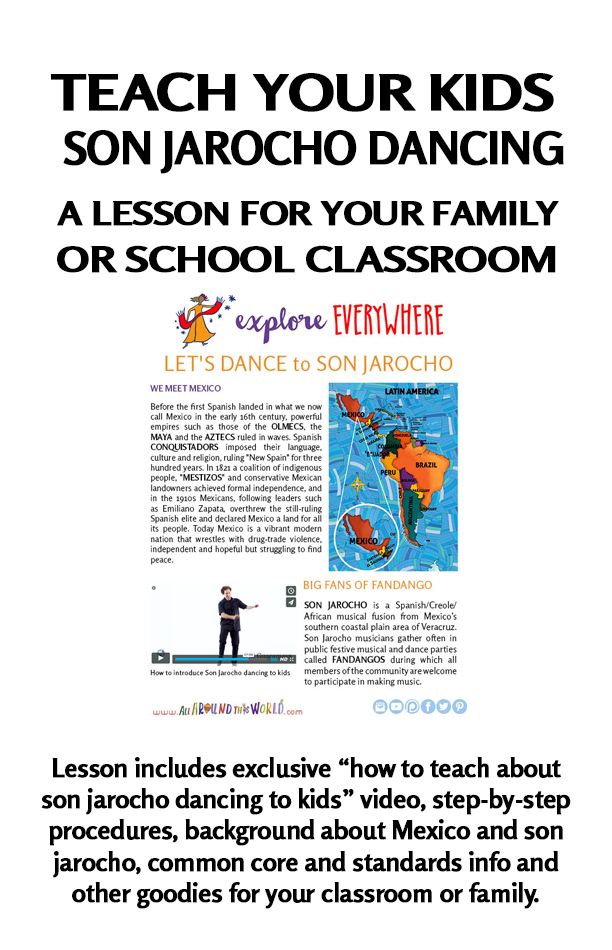
Son Jarocho is a Spanish/Creole/African musical fusion from Mexico’s southern coastal plain area of Veracruz. Son Jarocho musicians gather often in public festive musical and dance parties called fandangos during which all members of the community are welcome to participate in making music.
Instruments particular to the genre include a jarana, a quijada, a requinto, a mariumbula, a harp and a wooden dancing platform known as a tarima that the musicians actually consider a percussion instrument and factor into the arrangement of traditional songs.
Festejo, a word derived from the Spanish “fiesta,” is a form of celebratory Afro-Peruvian music. Festejo lyrics often provide historical accounts of the Afro-Peruvian population’s emancipation from slavery or celebrate some other type of popular liberation. The festejo dance is lively and witty, featuring gyrating hips and intricate footwork known as zapateado.
Afro-Peruvian music blends Spanish, African and indigenousmelodies and rhythms with energetic flair. Some of the most popular rhythms accompany dances such asthe marinera, an intricate courtship dance in 6/8 time, the festejo, a fast celebration dance also done in 6/8 and the lando, a 3/4 rhythm that comes from an African fertility dance. The genre’s most widely used instrument is the CAJON, a box drum with Peruvian origins that has since spread to Cuba and has even become an instrumental part of flamenco. Watch Fernando “Polo” Balanta play the Peruvian cajon. Another percussion instrument that appears in Afro-Peruvian ensembles is the donkey jawbone, or quijada, which the player scrapes with a stick to make the loose teeth rattle.
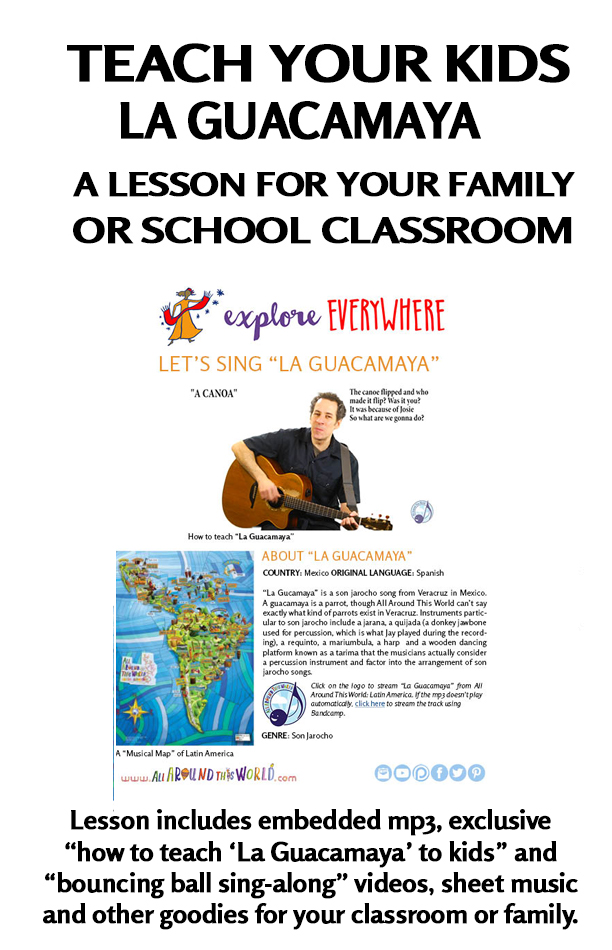
“La Gucamaya,” a son jarocho classic from Veracruz in Mexico, is much more than just any old Spanish song about a bird. A guacamaya is a parrot, though All Around This World can’t say exactly what kind of parrots exist in Veracruz. Instruments particular to son jarocho include a jarana, a quijada (a donkey jawbone used for percussion, which is what Jay played during the recording), a requinto, a mariumbula, a harp and a wooden dancing platform known as a tarima that the musicians actually consider a percussion instrument and factor into the arrangement of son jarocho songs.
Pobrecito guacamaya, you’re a hungry little bird
You’re a hungry little bird pobrecito guacamaya
Pobrecito guacamaya, I will share my food with you
If you only help me too, pobrecito guacamaya
Fly, fly, fly, can you teach me how to fly?
Pobrecito guacamaya, we can leave the world behind
Vuela, vuela, vuela, can you teach me how to fly?
Pobrecito guacamaya, we can leave the world behind.
Gabriel Guzmán: jarana, vocals
Julia del Palacio: bailadora, vocals
Juan Carlos Marín: requinto, vocals
Emmanuel Huitzil: marimbol
Carlos Cuestas: leona, vocals
We are revising the AllAroundThisWorld.com site and are currently using a new (better!) site — ExploreEverywhere.com — to tell you all about our curriculum offerings and how to become one of our teachers. That said, if you were on ExploreEverywhere, you clicked to find more information about a song or lesson, and landed here, you’re in the right place! Some links may be broken and a detail or two may be out of date…but close the popup window and enjoy!