Yemen’s influence on folk music of Israel — at the heart of the songs of Yemeni-Israeli musical legends like Ofra Haza — is strong.
A Jewish vocalist of Yemenite ancestry, Haza blended Yemenite music with modern instruments and song structures to create a dynamic and wildly popular rootsy pop-folk. In this video of “Tzur Manoti,” an ancient Jewish devotional text from Yemen that Haza made popular in Israel, Haza and her costumed and very animated performers dance the Yemenite step, also known as the Temadi — one of the most popular steps in Israeli folk dance.
Tag Archives | Yemen
Is Ahmed Fathi the True King of Oud?
Ahmed Fathi is “King of Oud!” (At least according to his website…and who are we to argue with that?)
Fathi was born and raised in isolated North Yemen where he demonstrated musical ability from an early age. Eventually he was able to join the “High Institute of Arab Music” in Cairo, and since then he’s been sharing Yemenite oud music with international audiences. Fathi blends Yemenite folk with orchestral arrangements, creating a modern and fluid yet still traditional sound. And, as you’ll see in this video, he’s great!
Sometimes You Just Need a Nasheed
The most formal yet widely adored form of Islamic musical poetry in Yemen — often, if not always, religious in content — is the Yemeni nasheed.With a singer with a high-pitched voice who leads a chorus in call and response compositions, going back and forth between demonstrating vocal artistry and eliciting participation by the group, the Yemeni nasheed (also sometimes written as “nashad”) plays an important role in Yemeni society by providing the musical soundtrack for Yemeni life events like weddings and funerals. Nasheed music (the term that refers both to the form and the performer) seems to be adapting as Yemenis become more connected to global music, growing into modern sounds while still retaining its traditional meaning. (Let’s see one in this video.)
We Vote Yes on Yemen

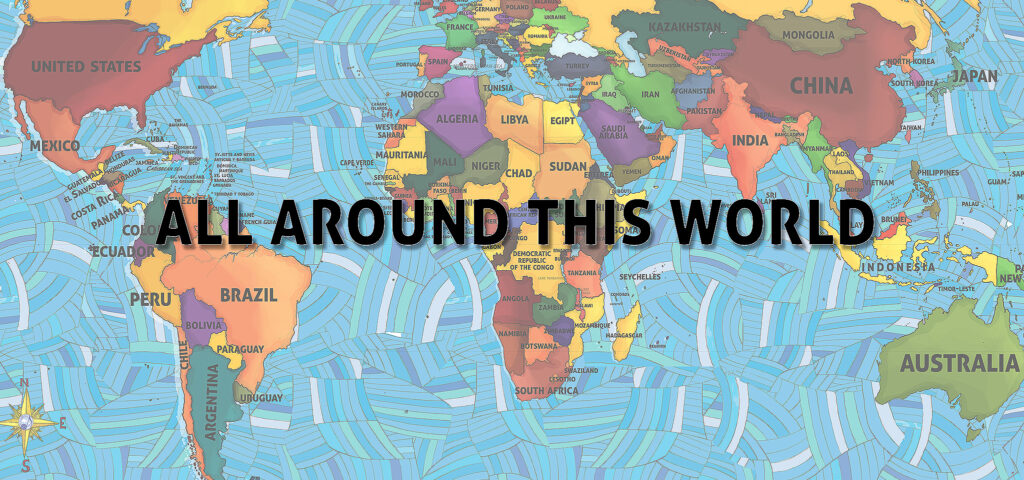
This week in our online music class we travel to the southernmost part of the Arabian peninsula. Colonial powers have sought to control Yemen for centuries because it sits at the intersection of the Red Sea and the Gulf of Aden, an essential thoroughfare for international shipping. Yemen has a fascinating multi-tribal culture that one would also think would attract international travelers, but Yemen has never had great financial resources to develop a tourist infrastructure, and it also has an unfortunate tradition of tribal, religious and political in-fighting that occasionally devolves into internal struggle. At this writing Yemen is in peril — at war, facing famine, a pawn in a conflict between much more powerful countries. We honor this reality, and we also honor Yemen’s thousands of years of gifts to the world in hopeful, peaceful music and dance.