COUNTRY: Cuba
LANGUAGE: Spanish/instrumental
The habanera rhythm is a “syncopated” Cuban rhythm that contributed to the early foundations of American Jazz.


COUNTRY: Cuba
LANGUAGE: Spanish/instrumental
The habanera rhythm is a “syncopated” Cuban rhythm that contributed to the early foundations of American Jazz.
Country: Cuba
Language: Spanish
Genre of original: Son
“Má Teodora” is reputed to be the oldest Cuban son, dating, perhaps (though not definitely) way back to the late 1500’s/early 1600’s when the West African rhythm that became known as the Clave met early Spanish melodies and lyrical forms. In the original, our friend Teodora has gone out to gather and chop wood for the fire. Throughout the song Teodora chops wood and we all dance. Learn about the legend of Má Teodora.
Lyrics of All Around This World version:
¿Donde esta la Má Teodora?
Rejando la leña está
¿Donde esta la Má Teodora?
Rejando la leña está
Original lyrics:
¿Dónde está la Má Teodora? Rajando la leña está.
Con su palo y su bandola Rajando la leña está.
A fines del mil quinientos
Por la provincia oriental,
Doña Ginés lanzó al viento
Su gran creación popular.
Má Teodora le decían
Cuando nos compuso el son.
A La Habana lo traía,
En música linda entró.
Son oriental, tan cubano,
La Habana te enriqueció.
Lo español y lo africano.
En tu arte se fundió.
Baila conmigo este son,
Goza el ritmo sabrosón.
Baila conmigo este son,
Goza el ritmo sabrosón.
Carpenter ha demostrado
Que Má Teodora existió
Y Muguercia lo ha negado
Y yo gozo el bacilón.
El son un tres necesita,
No hay tango sin bandoneón
Y el baile de esa chiquita
Me exige mucha emoción.
Baila conmigo este son,
Goza el ritmo sabrosón.
Baila conmigo este son,
Goza el ritmo sabrosón.
Baila conmigo este son.
Rajando la leña está.
Má Teodora baila este son.
Rajando la leña está.
Rajando la leña está.
Corta… la leña.
Corta… la leña.
Má Teodora baila este son.
Corta… la leña. Corta… la leña.
Má Teodora baila este son.
Corta… la leña. Corta… la leña.
Rajando la leña está. Corta… la leña.
Corta… la leña. Rajando la leña está.
The musical genre “Batá” is synonymous with batá drums, Cuban instruments that provide its driving beats. Batá drumming is part of a Cuban religious tradition that has firm ties to Yoruba (Nigerian/Beninese) religion and culture. Religious batá drumming is meant to inspire the orishas, the spirits, to inhabit the bodies of dancing priests. In the 1930s batá started to appear in folkloric situations and over the last several decades the art of batá drumming has developed an appeal worldwide.
COUNTRY: Cuba
KEY GENRES: Batá drumming
Guaracha is a form of music with bawdy lyrics originally meant to accompany dances that blended Spanish and African moves. The guaracha appeared first in Spain and became a staple of Cuban theater groups that toured Puerto Rico in the 1800s, which would play clever guaracha songs between acts of their performances to keep the audience entertained.
COUNTRY: Cuba, Puerto Rico (U.S.)
KEY INSTRUMENTS: Bass, Bongo, Congas, Cuatro, Guiro, Maracas, Piano, Tres, Trumpet
[mappress mapid=”16″ center=”-8, -60″ zoom=”3″]
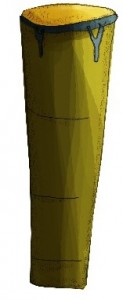 The bocu (boku) is a tall, thin Cuban drum that’s a close relative of the African ashiko. The bocu is a key instrument in a “comparsa,” an ensemble of percussionists that marches in the streets of Santiago de Cuba during Carninval playing a style of music called conga.
COUNTRY: Cuba
KEY GENRES: Conga
Congas are African-descended drums that are a staple of most Afro-Cuban percussion ensembles. Sets of congas usually come in threes: the quinto drum, which has the highest pitch, the segundo which is in the middle and the tumbadora, which is the lowest.
A bit about the Conga and how to play it | Conga Masters Second Round!
[wpspoiler name=”Listen to Malaga performed by Trovadores, Trio Matmoros” open=”true” style=”aatw-video”][/wpspoiler]
In the 19th century in eastern Cuba, specifically in and around Santiago de Cuba, guitar-playing singers known as “trouvadores” traveled the land performing poetic and passionate Spanish-inspired songs, especially boleros in 2/4 time (as opposed to the Spanish bolero, which is in 3/4). [About the bolero | bolero on the front porch stoop in Santiago de Cuba] Wikipedia’s entry on trova introduces some of the “founders” of TROVA and follows the genre from the 1800’s into the politically-inspired post-Cuban revolution Nueva Trova of the 1960s. Watch Nuevo TROVA singer Silvio Rodriquez perform “Ojala.”
For an instrument that’s essentially just two sticks made of wood meant to be clicked together, the claves have had an disproportionate influence on the trajectory of global music. The claves have a distinct sound that can cut through almost any percussion ensemble, keeping everyone true to the clave/”key” rhythm. Learn bit about the claves and, if you follow to the next video and then the next, how to play them.
COUNTRY: Cuba and many more
KEY GENRES: Salsa, Son and many more
The “Chinese horn” (trompeta china), a Cuban instrument, is a small, high-pitched version of a horn from China known as a suona, which Chinese immigrants brought to the eastern part of Cuba in the late 19th century. Today the Chinese horn appears primarily during Carnival in Santiago de Cuba, where musicians play it more like a trumpet than like a Chinese traditional instrument.
COUNTRY: Cuba
KEY GENRES: Conga
“Campanas” means “bells” and, musically, can refer to pretty much any bell that one plays as an instrument–anything as “formal” as a cowbell could be considered campanas, or anything metal anyone finds on the street and hits with a stick. In conga street processions during Carnival in Santiago de Cuba, members of sprawling, everyone-in percussion parades are known to grab any kind of bell to make joyful noise, from official percussion instruments to kitchen implements to metal wheel hubs and other car parts.
COUNTRY: Cuba
KEY GENRES: Conga